Autore: Municipality of Montegrimano Terme
Villages
Arts and Culture
Municipality of Monte Grimano Terme
Among forests, pastures, and ancient medieval roads, dozens of routes unfold for MTB, trekking, and gravel biking.
The area hosts various initiatives connected to the world of sport, including sporting events and gatherings.
History and nature are closely intertwined in Monte Grimano Terme.
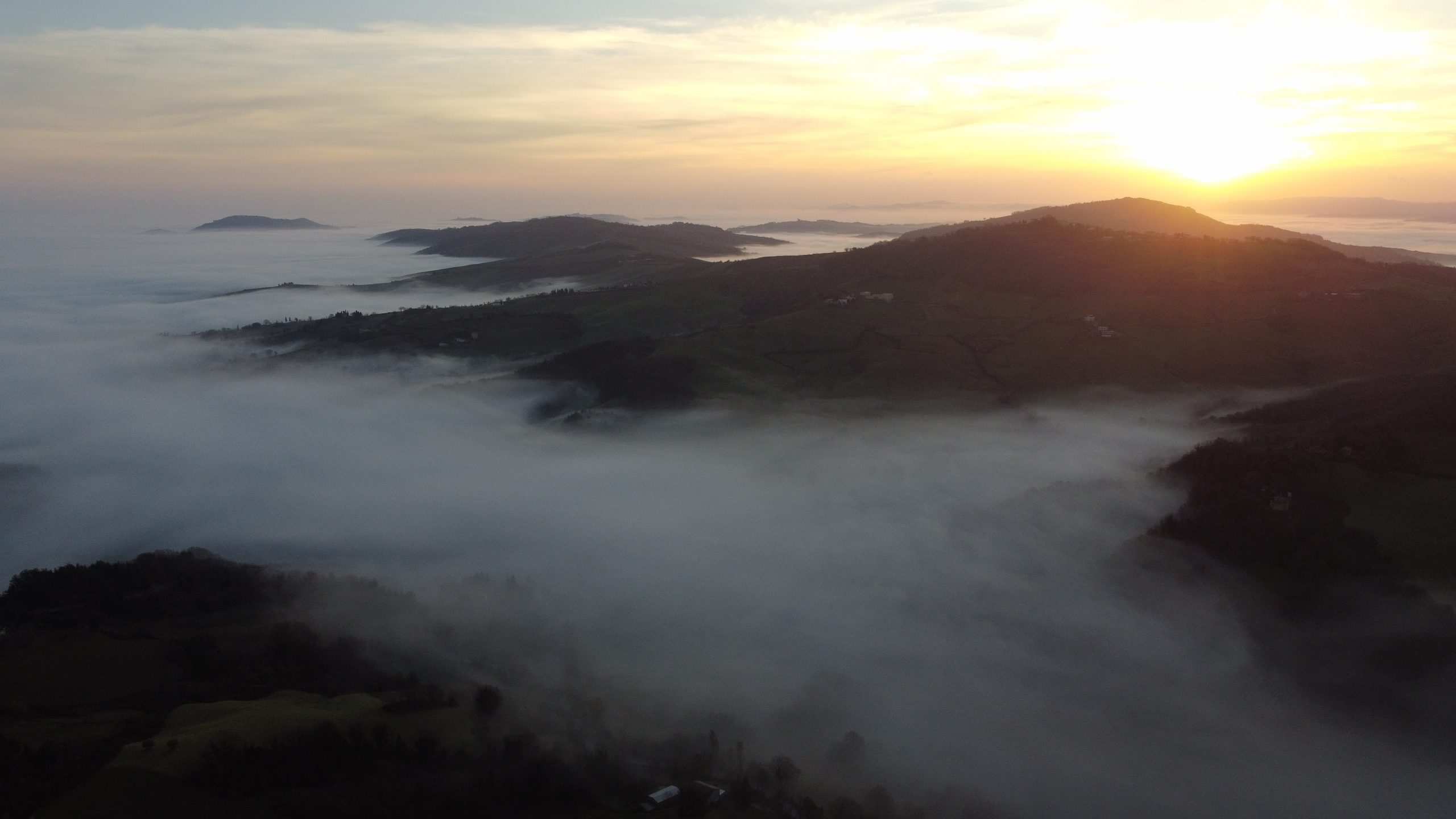
The village and its surrounding hamlets are immersed in unspoiled nature, between the slopes of Monte San Paolo and Monte San Lorenzo.
Details
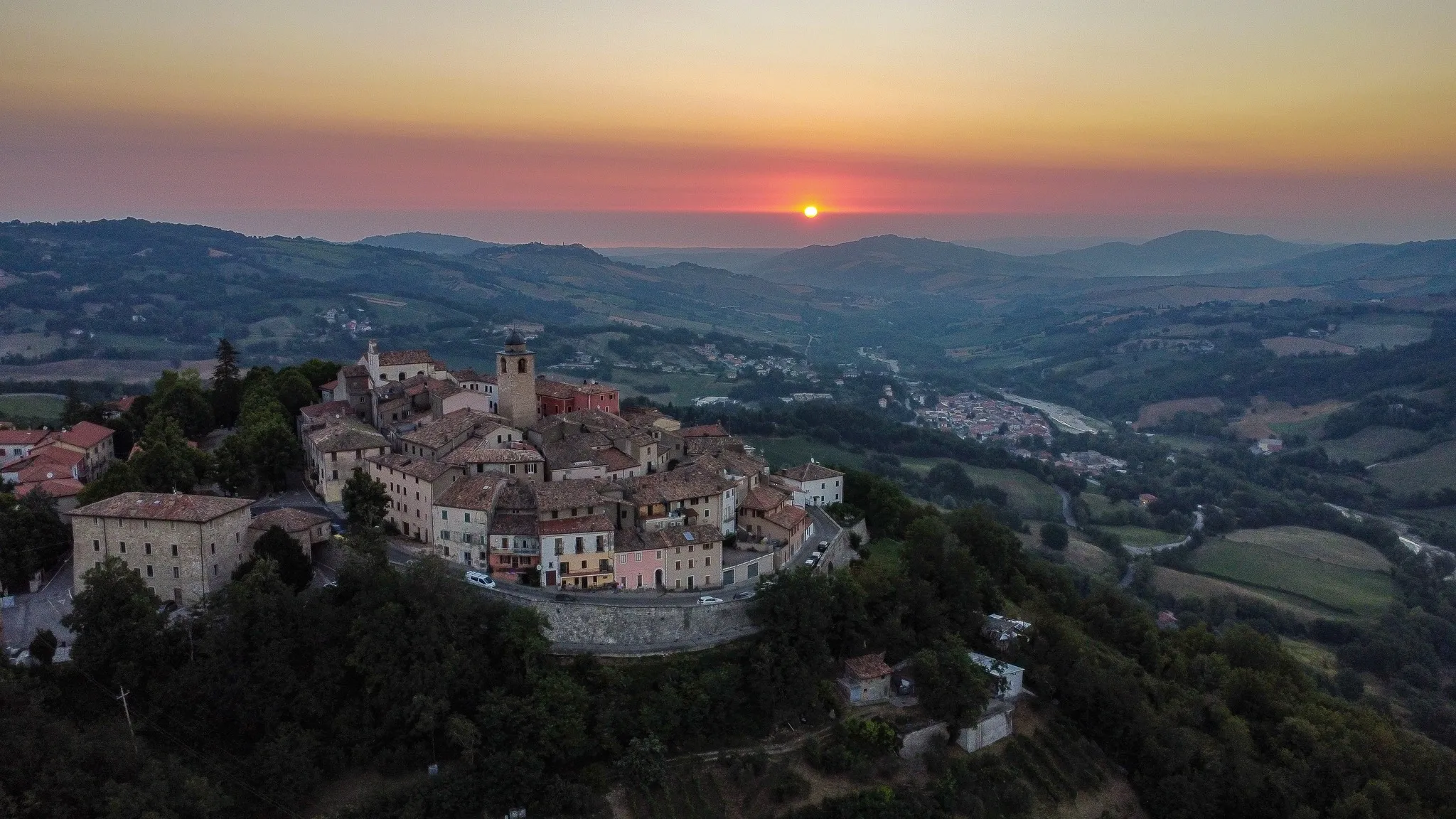
Monte Grimano Terme, formerly called Mons Germanus, is situated on a spur overlooking the Conca valley and, thanks to its 600 meters above sea level, offers exceptionally pure air, a mild and temperate climate, and the relaxing atmosphere of rolling hill landscapes. Monte Grimano Terme is part of The Most Beautiful Villages of Italy association, which aims to safeguard, preserve, and revitalize small Italian towns.
An ancient medieval castle, it played an important role in the conflicts between the Montefeltro of Urbino, for whom it was a defensive stronghold, and the Malatesta of Rimini.
Today, the village serves as a true gateway to the Montefeltro region for visitors coming from Romagna. Nestled in a charming natural setting, the nearby Monte S. Paolo springs produce precious therapeutic waters—alkaline, bromide-iodine-salt, and sulfuric—that are used in the well-equipped hydrotherapy center, currently temporarily closed.
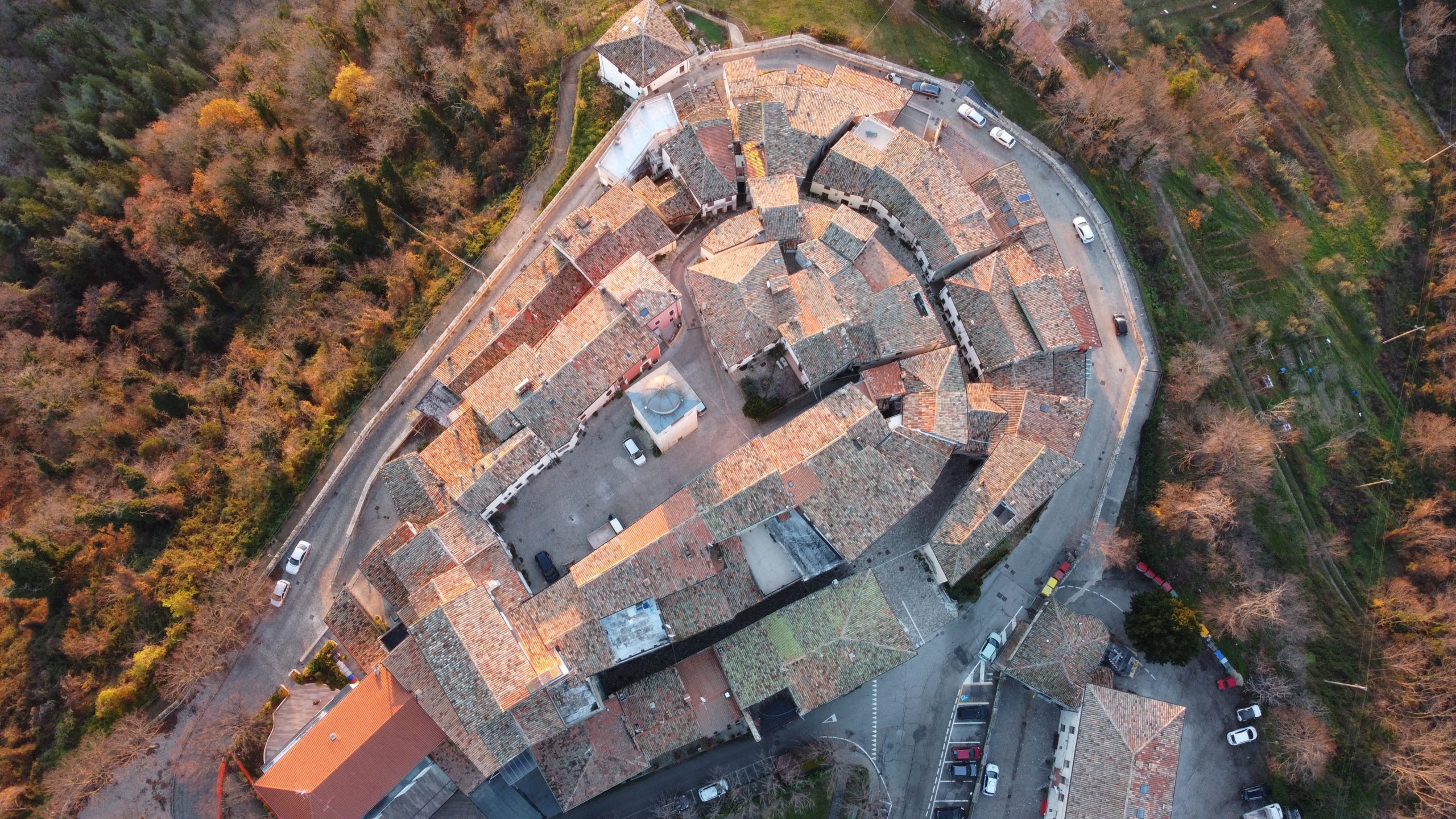
The historic center features a spiral-shaped urban layout typical of medieval design. The 15th-century civic tower is the only remaining part of the Medieval Palace. In the parish church of San Silvestro, built at the end of the 18th century based on a design by Cosimo Morelli of Imola in a neoclassical style (later modified), there is a small organ, a musical gem with just under 500 pipes, catalogued as a cultural asset of the Marche region.
Among the most notable annual events in Monte Grimano Terme are the Black Truffle Festival (July) and The Village Celebrates – The Good Meat of Montefeltro (August).
History of the Civic Tower of Monte Grimano Terme
Our History: From Mons Germanus to the Thermal Baths of Monte Grimano
Available Services
Info
Noleggio bici
Parcheggio
Ristoro
Servizi igenici
Shop
Visite guidate
Palestra
Ristorante
Stazione di ricarica per veicoli elettrici
Area bambini
Bagno per disabili
Gallery
Multimedia Archive
Descrizione:
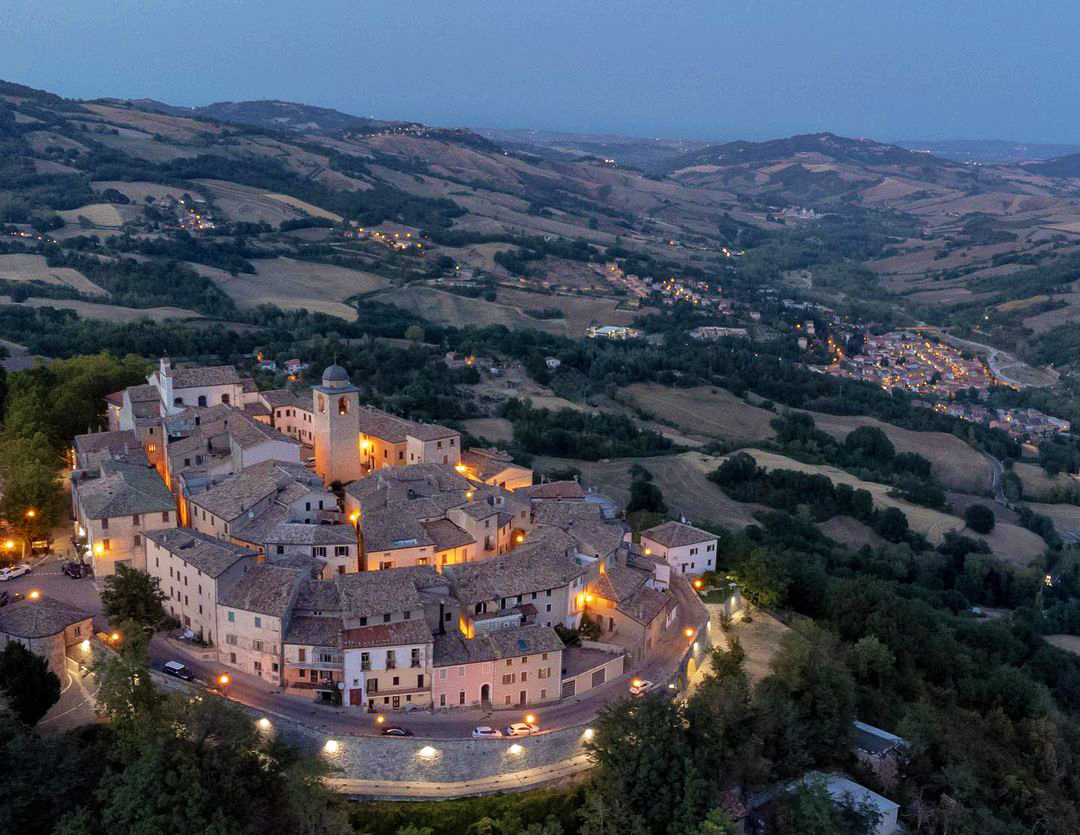
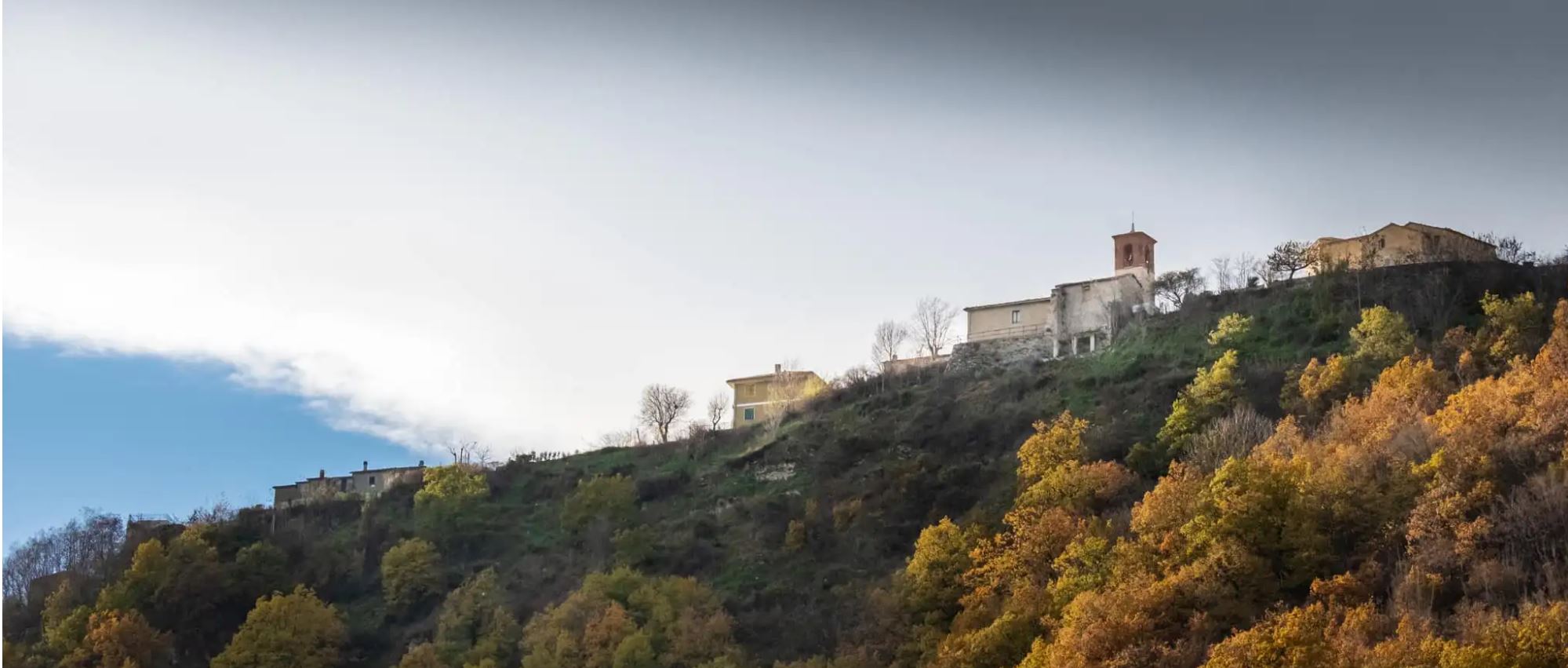
Suspended between the rolling hills of Montefeltro and the Riviera’s horizon, Montegrimano Terme is a jewel set in nature, deservedly called the 'Pearl of the Valconca'. This ancient medieval village fascinates visitors with its characteristic spiral structure that wraps around the hill, leading the eye up to the ancient Civic Tower, a sentinel over breathtaking views.
Suspended between the rolling hills of Montefeltro and the Riviera’s horizon, Montegrimano Terme is a jewel set in nature, deservedly called the 'Pearl of the Valconca'. This ancient medieval village fascinates visitors with its characteristic spiral structure that wraps around the hill, leading the eye up to the ancient Civic Tower, a sentinel over breathtaking views.
Licenza: Creative Commons (CC 4.0 International)
Crediti: D.Salvatori e A. de Simone
Descrizione:
Under a blanket of pristine white snow, Montegrimano Terme is transformed into a silent Nativity scene, where the only sound is the crunch of footsteps on ancient alleys. Flakes dress the medieval stone in white, reshaping the village’s spiral layout in a muffled, fairytale embrace. The crisp air brushes against your face as your gaze wanders toward the snow-covered Valconca, offering a spectacle of pure peace. Between frost-dusted rooftops and the Civic Tower standing in solitary prominence, time seems to stand still, gifting the wanderer an atmosphere of suspended enchantment.
Under a blanket of pristine white snow, Montegrimano Terme is transformed into a silent Nativity scene, where the only sound is the crunch of footsteps on ancient alleys. Flakes dress the medieval stone in white, reshaping the village’s spiral layout in a muffled, fairytale embrace. The crisp air brushes against your face as your gaze wanders toward the snow-covered Valconca, offering a spectacle of pure peace. Between frost-dusted rooftops and the Civic Tower standing in solitary prominence, time seems to stand still, gifting the wanderer an atmosphere of suspended enchantment.
Licenza: Creative Commons (CC 4.0 International)
Crediti: Montegrimano Municipality Press Office

La medievale denominazione di questo castello del Montefeltro è Mons Germanus
Monte Grimano Terme, originally known as Mons Germanus, has medieval origins and was an important Montefeltro castle, strategically positioned overlooking the Valconca.
Mentioned in a 962 charter issued by Emperor Otto I, it was granted as a fief to the Carpegna family. In the following centuries, it became a well-structured stronghold, complete with walls, a moat, and a watchtower. In the 13th century it gained prominence as Castrum Montis Grimani, and in the 14th century it came under papal authority.
During the conflicts between the Malatesta and the Montefeltro families, it was besieged several times, but in 1461 it returned definitively under Montefeltro control. From the 16th century onward, it experienced a period of stability, with an economy based on agriculture, craftsmanship, and trade. In the 17th century its military function declined, and the village began to expand beyond its walls.
In 1889 the thermal springs were reactivated, marking the beginning of wellness tourism. Today, Monte Grimano preserves the memory of a rich and complex history, visible in its urban structure and in the surviving architectural traces.
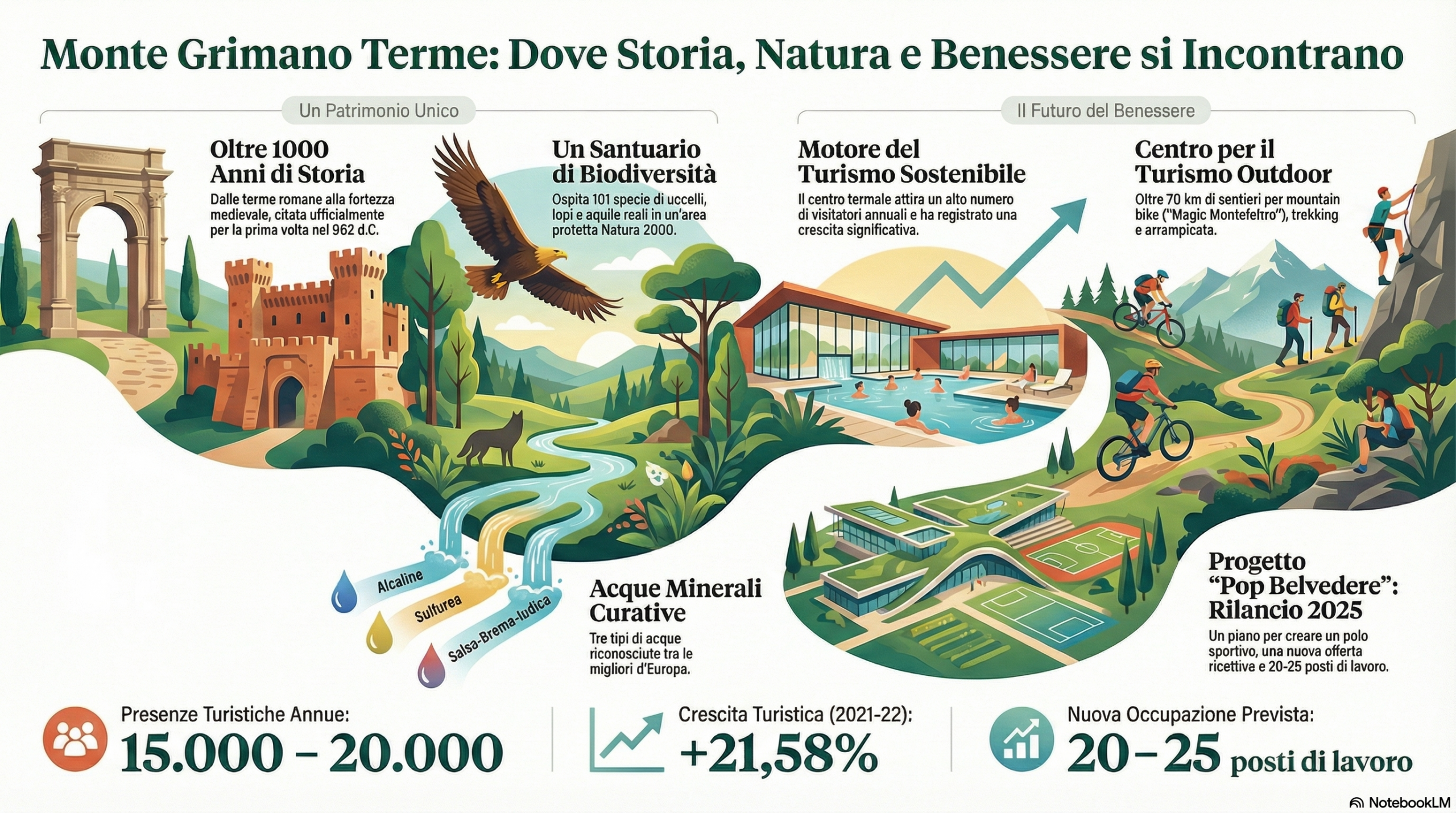
A Medieval Village of Tradition, Well-being, and Natural Excellence
Monte Grimano Terme represents an important historical, touristic, and natural landmark in the province of Pesaro and Urbino, in the heart of the Montefeltro region.
This report analyzes the evolution of the village from its medieval origins to its contemporary development as a thermal, wellness destination and biodiversity hub.
With roots dating back to the Roman era, a strategically significant medieval fortified structure, and an extraordinary natural heritage, Monte Grimano Terme embodies the historical richness, natural resources, and economic potential of the Marche region.
The document integrates analyses of the local economic context, the biodiversity of the Montefeltro ecosystem, and a photographic gallery of the territory.
Crediti: Perplexity AI, personal communication, December 2, 2025
Dove il tempo respira
COAT OF ARMS
The coat of arms of the Municipality of Monte Grimano Terme was granted by decree of the President of the Republic on September 11, 1996.
"Azure, a winged child in majesty, naked, with flesh-colored skin, black hair, silver wings, right arm bent across the chest with the index finger pointing downwards, left arm bent at a right angle with the hand raised and index finger pointing upwards; the child stands on a green field, flanked by two Italian-style mountains of three golden hills each, one on the right, the other on the left, rooted on the green field."
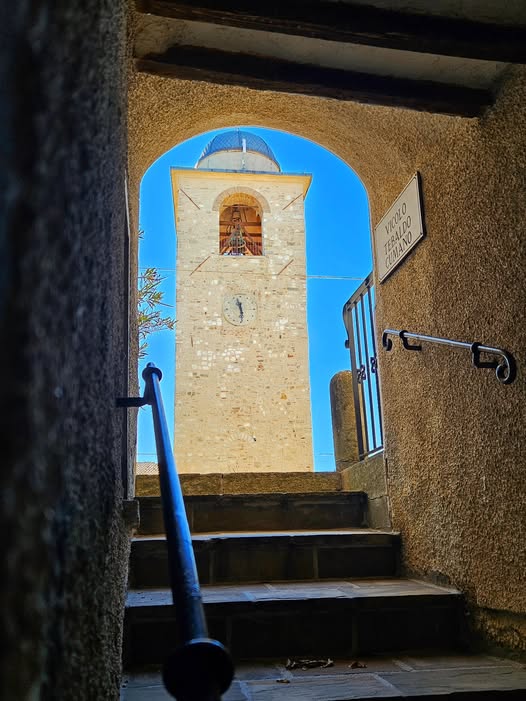
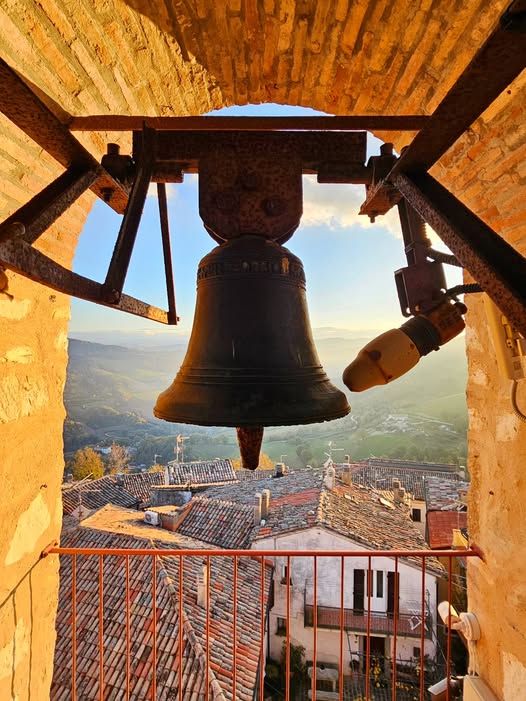
This small Montefeltro village has a “snail-shaped” urban layout, with narrow streets that climb to the top of the slope, offering a commanding view over the Conca Valley. The historic center is squeezed between this cliff, nearly 300 meters above the valley, and the ancient castle, of which only the civic tower remains. Standing 18 meters tall, this tower, dating from the first half of the 15th century, is the symbol of Monte Grimano. The three bells it houses date back to 1613 (the largest), 1797 (the medium), and 1811 (the smallest). The original Romanesque style was modified in the 18th century with the addition of a domed roof.
In the village, two barriers correspond to the ancient castle gates, now disappeared, along with the drawbridge. The old walls were incorporated into houses from the 17th century, after permission was granted to build on them. The current walls were raised in the early 20th century to protect the perimeter road from landslides.
At the entrance of the town stands the 17th-century residence of the Massaioli family, now the Town Hall. Halfway between a noble residence and a country villa, it retains the staircase to the first floor, a fireplace, and, in the basement, vaulted structures and the snow well of the former owners.
The parish church, dedicated to Pope Saint Sylvester, is elegant in the clear simplicity of its late 18th-century neoclassical style, designed by Cosimo Morelli from Imola, architect of the Papal States. Inside, it houses eight large paintings dating from the 17th to the 19th centuries. Notable features also include a 16th-century crucifix and an 18th-century pipe organ, crafted by organ builders from Bologna and Verucchio, recently restored and fully functional.
The “living room” of the community is Piazza Garibaldi, where the civic tower stands prominently after the removal of dilapidated houses and structures in the 19th century. It is not surrounded by incongruous buildings in style or height and is therefore used for cultural and musical events, benefiting from excellent acoustics.
ENTERTAINMENT AND ACTIVITIES
- Nature Excursions: Explore the natural beauty of the Montefeltro region. In town, enjoy the thermal pool and wellness center.
- Thermal Baths: The Monte Grimano Thermal Baths, part of the Erbavita Health Center, use alkaline, sulfurous, and bromoiodic waters, known since the Middle Ages, sourced from the slopes of Mount San Paolo.
- Mount San Paolo: Rising 900 meters and partly within the Simone and Simoncello Park of Monte Carpegna, the area is rich in woods and pastures, offering panoramic views of the Adriatic coast from Cesenatico to Pesaro and the Apennine range.
- Civic Tower: Not only hosts exhibitions but also features three reading rooms at the heart of the “LiberaLibri” project, complemented by twenty other book-crossing points around the municipality, in small wooden boxes or commercial spaces.
- Panoramic Walks: Around the village walls, a scenic walkway inaugurated in June 2014 showcases the results of two decades of historic center redevelopment.
- Monte Tassi: Another ancient settlement, evidenced by the remains of a high medieval castle, sits on a cliff over 600 meters above sea level.
- Mountain Biking: Trails through fragrant woods and mountain paths offer an adventure for all, with challenging climbs and adrenaline-filled descents. Riding here means discovering the village from a fresh perspective, immersed in nature. Every pedal stroke reveals panoramic views and hidden corners, among silence and wonder. After the ride, relaxation at the thermal baths and tasting local flavors completes the experience—a perfect blend of sport, beauty, and well-being.
More informations
The Most Beautiful Villages of ItalyRecognized as One of the Most Beautiful Villages in Italy
More informations
WIKIMEDIA FOUNDATIONLANDS OF WELL-BEINGPesaro 2024: Discovering Monte Grimano TermeRIVIERA of BEAUTYPESARO TRAVELTHE TRAVELS of CORRIERELET'S MARCHEMARCHE TRAVELINGITALIA.ITITALY GUIDEAMARCHE: Wonderful DiscoveriesVirtuous MunicipalitiesTHE TOURISTAppennino RomagnoloIL RESTO DEL CARLINO: Things to DoTourism: In the Montefeltro, the new camper area ‘Pop Belvedere’ with swimming pool opensMonte Grimano Terme Joins the Itinerary of BeautyItinerary to Discover the Most Beautiful Villages of MontefeltroMonte Grimano Terme, Marche: A Village and a Project for RebirthMonte Grimano Terme: A Story of Rebirth